
Core Rules
Keep your pet standing upright with its neck held up Wrap the measuring tape snugly against your pet for accurate readings; take measurements multiple times for precision
Key Measurements Breakdown
- Chest GirthMeasure the widest circumference right behind the base of the front legs
- Neck GirthCircumference of the lower neck
- Back LengthFrom the back of the collar base to the root of the tail
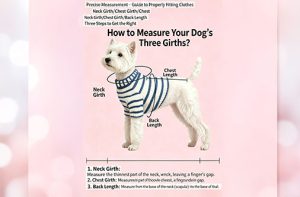
Tools & Supplies for Measuring
- Measuring Tool: Non-stretch soft tailor’s tape with clear markings. If unavailable, wrap paper strip around your pet then measure the strip with a straight ruler
- Calming Supplies: Your dog’s favorite treats, beloved toys
- Aids: Non-slip mat, a second person to assist holding the pet steady
Detailed Measurement Tutorials
Neck Girth
📍 Measuring Spot: The thickest part of your dog’s neck (roughly 5cm below the chin, where collars naturally rest)📏 Measuring Steps: Wrap the tape closely against the skin. Leave enough space to fit two fingers underneath (add an extra 1–2cm for comfort). Adjust extra allowance based on fur thickness: add 2cm for long thick coats, 1cm for short smooth fur⚠️ Common Mistakes to Avoid: Do not pull the tape tight enough to pinch neck skin folds. If indentations appear when your dog lowers its head, the fit is too tight; if clothes slide up toward its ears when it lifts its head, the fit is too looseChest Girth
📍 Measuring Spot: The bulgiest, fleshiest area behind the front legs when bent backward – feel around to locate the thickest chest section📏 Size Allowance: Add 2–3cm for standard breeds (Shiba Inu, Corgi etc.). Add 3–4cm for stocky/deep-chested breeds (French Bulldog, Golden Retriever etc.) to leave room for chest expansion during breathing and running💡 Pro Tip: Chest girth directly determines wearing comfort. Too tight restricts lung movement and causes heavy panting; too loose leads to chafing under the armpitsBack Length
📍 Measuring Spot: Start at the prominent bony bump at the base of the neck (7th cervical vertebra, visible when your pet lowers its head). End at the root of the tail (the base of the tail bone, NOT the tip of the tail)✂️ Size Adjustment by Garment Type- Sweaters & Hoodies: Add 1cm to the raw back length for a relaxed casual fit
- Raincoats & Sun Protection Shirts: Stick strictly to raw back length. Excess length blocks your pet’s vision, while insufficient length leaves the belly exposed to rain or sun